24 seconds. Captions are in the player menu.
Family trusts: can and can't
Short answer
A family trust trustee can allocate the income within what the trust deed allows, and adult beneficiaries pay tax at their own rates on their share of the net income. A trust cannot hand out a loss (it stays in the trust and carries forward), cannot make children taxed like adults (for 2025-26, most trust income of under-18s above $416 is taxed at higher rates), and cannot decide after 30 June (resolutions make beneficiaries entitled by 30 June).
Last reviewed: 25 October 2026. General information only - not personal advice. Tax7 prices are ex GST.
Related: Family trust tax guide, Companies and trusts
Full text of the video
This video has no voice-over. This is everything shown on screen, in order.
- Family TrustsWhat a trust can and can't do
- CANTrustee allocates the incomewithin what the trust deed allows
- CANAdult beneficiaries pay at their own rateson their share of the net income
- CAN'THand out a lossIt stays in the trust and carries forward
- CAN'TTax kids like adults$4162025-26: most trust income for under-18s above this is taxed at higher rates
- CAN'TDecide after 30 JuneResolutions make beneficiaries entitled by 30 June
Sources
- ATO - Trust income, losses and capital gains (print section, published 25 Feb 2025)
The entitlement will depend on the trust deed and any discretion that the trustee has under the deed to allocate income between beneficiaries.
Adult and company beneficiaries pay tax on their share of the trust's net income at the tax rates that apply to them.
A loss made by a trust in an income year can't be distributed to beneficiaries. However, it can be carried forward and used to reduce the trust's net income in a later year.
Higher rates of tax apply to most trust distributions to minors
The important thing is that your resolution makes one or more beneficiaries presently entitled to the trust income by 30 June.
- ATO - Tax rates if you're under 18 years old
Table 1: Tax rates for residents who are under 18 for 2025-26
Nil plus 66% of the excess over $416
45% of the total amount of the income that is not excepted income
More short videos
All videos
Are you missing these deductions?
Three deductions worth checking for Tax Time 2025-26: the fee you pay a registered tax agent to lodge your return, income protection premiums (not if the policy sits inside your super), and gifts to a registered charity from 1 July 2024, even under $2, with the receipt.
24 second video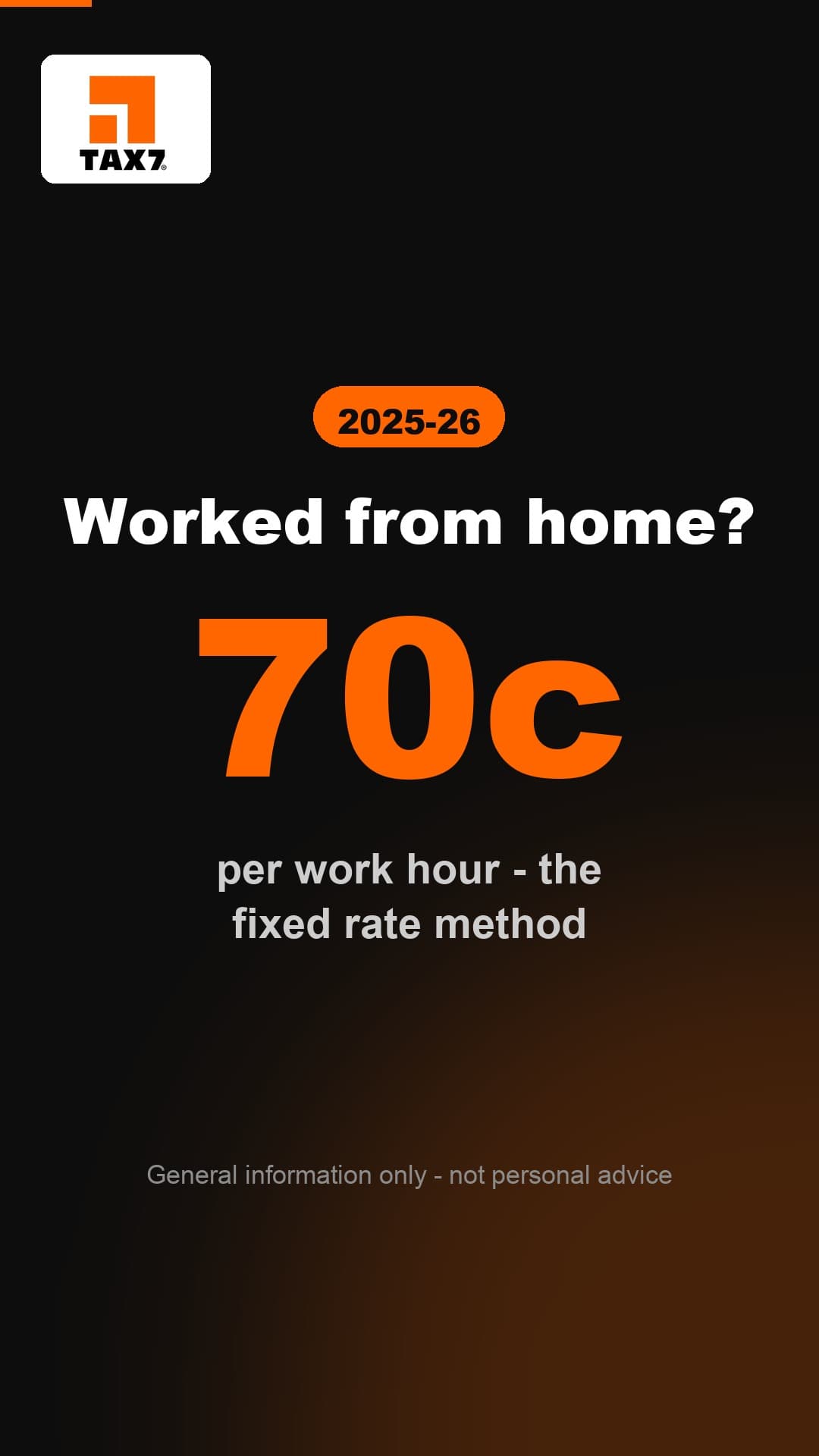
Worked from home? 70c an hour
For 2025-26 the ATO fixed rate method for working from home is 70 cents per work hour.
24 second video
Your super's tax-friendly limit
The concessional (before-tax) super contributions cap is $32,500 from 1 July 2026 (2026-27); the 2025-26 cap is $30,000.
24 second video
Unused super cap? It can roll forward
If your total super balance was under $500,000 at 30 June of the previous year, you can use unused concessional cap from up to 5 previous years.
24 second video